Raising Gifted LearnersFebruary 24, 20266 min read
When Being Smart Doesn’t Always Look Like Success
You know your child. You’ve watched them devour entire books in an afternoon, explain the water cycle to a younger sibling with surprising accuracy, or teach themselves something new from a YouTube video before you even realized they were curious about it. Learning has always come naturally to them, and for the most part, school has felt easy; sometimes too easy.
So it catches you off guard when something changes.
Maybe it’s a math concept that requires more than one read-through. Maybe it’s a project with no clear right answer. Maybe they sit down to try something genuinely new, and within minutes you hear: “I can’t do it.” Or “This is too hard.” Or even just silence, followed by them walking away from it entirely.
You wonder if they’re being dramatic. You wonder if something is wrong. And honestly, a small part of you wonders if they just don’t want to work.
Here’s what’s likely happening instead: your child has run into something they weren’t fully prepared for. Not because their abilities are lacking. Instead it is because, up until now, they may never have needed to genuinely struggle with something.
Gifted Students Are Often Used to Success Coming Easily
For many advanced learners, the early years of education feel almost frictionless. They grasp concepts before the lesson is finished. They remember information without much review. They solve problems that stump other kids without being able to explain exactly how they did it.
That experience, repeated hundreds of times across years of learning, quietly shapes how a child understands their own intelligence. Somewhere along the way, the lesson they absorb isn’t only academic content. It becomes their belief: Being smart means things come easily. If I have to struggle, something must be wrong with the problem, or with me.
This is why challenges can feel threatening to gifted learners in a way that can look like avoidance or laziness. When a student who has always finished first suddenly can’t finish at all, the experience is disorienting.
The frustration you’re seeing isn’t entitlement. What you’re seeing is often genuine confusion, and sometimes, genuine fear.
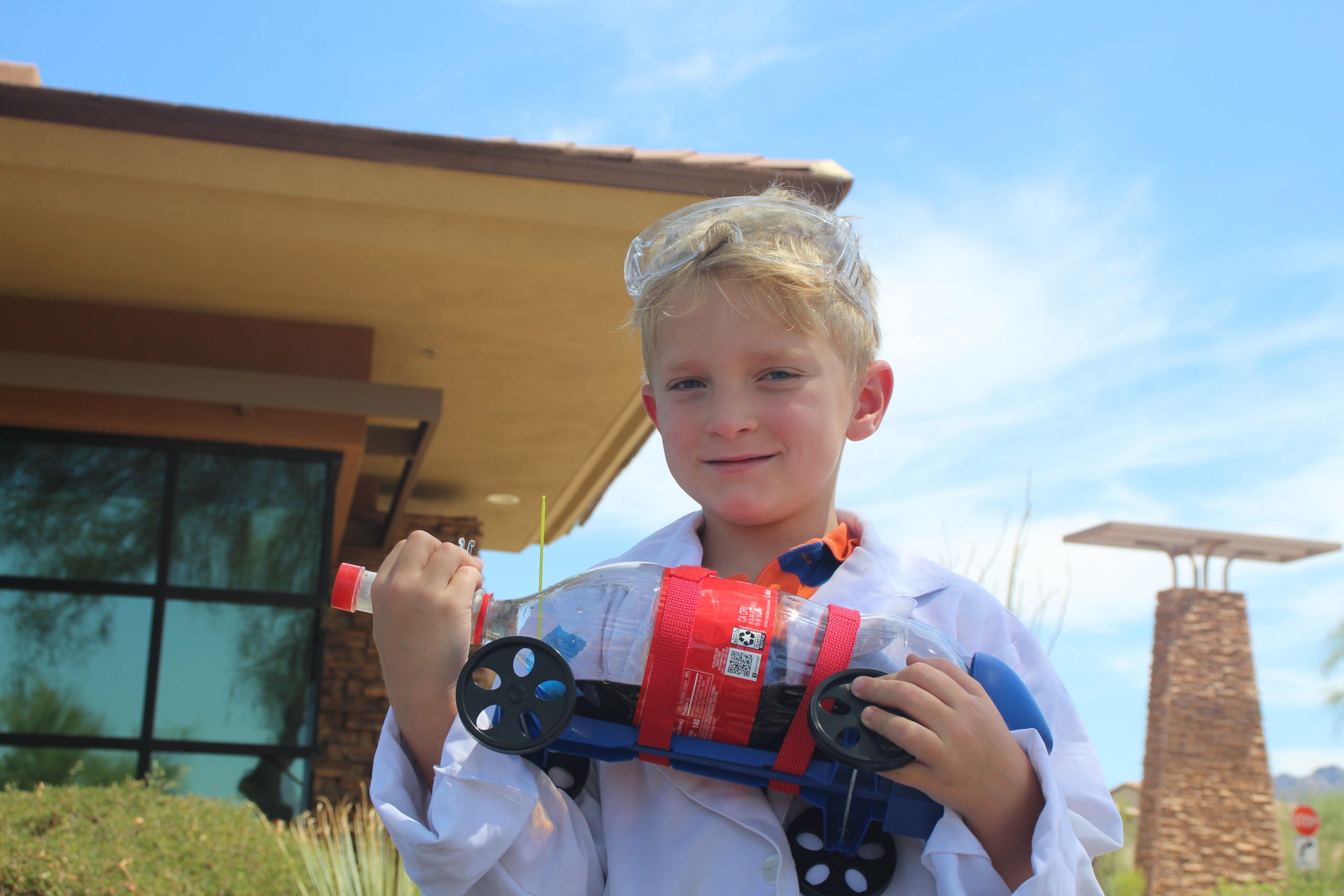
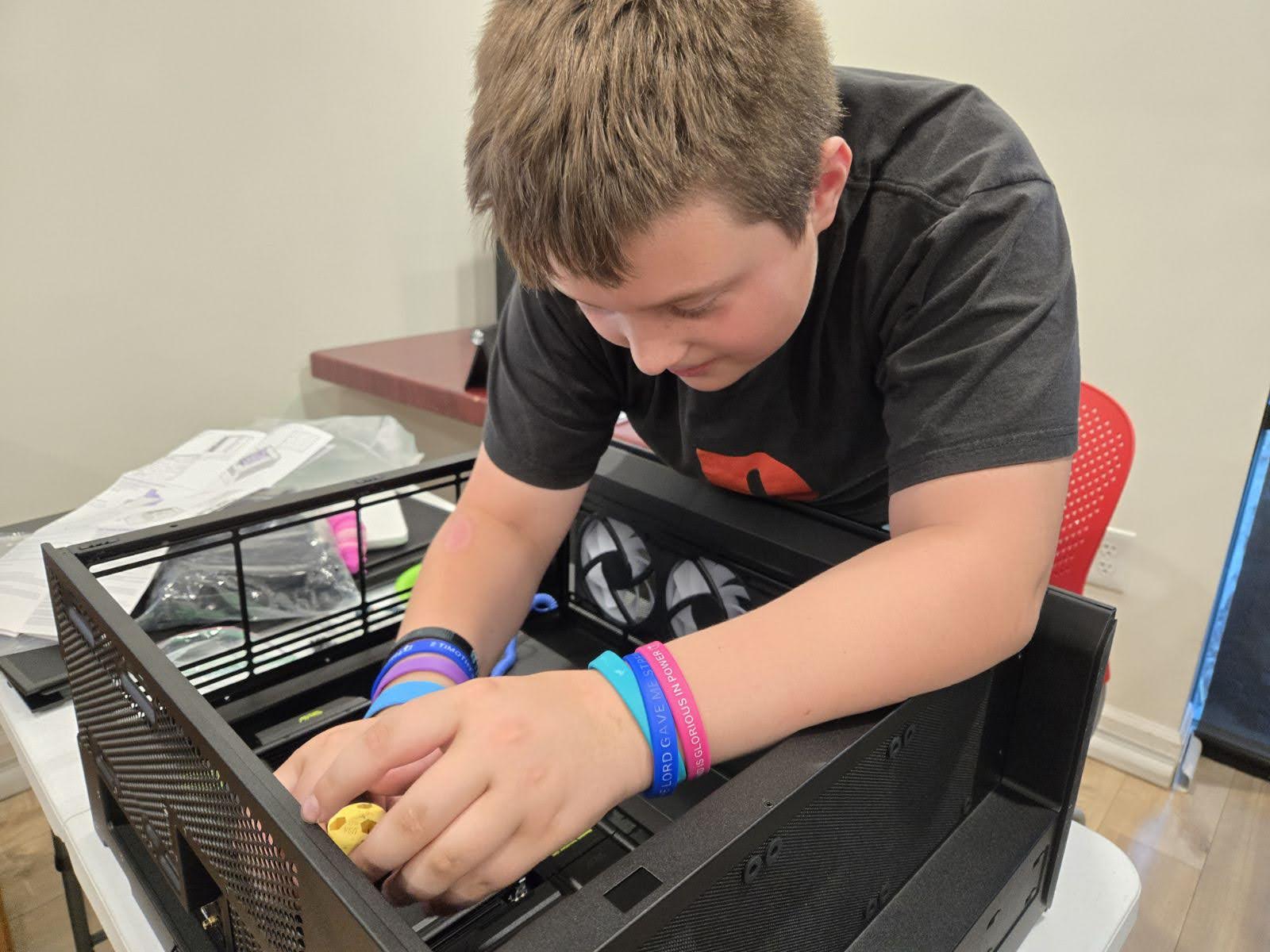
A Waybright Challenge: Build a LEGO Balloon-Powered Car
This is an activity worth trying at home, not because it’s easy, but because it almost certainly won’t be.
Try This at Home
Build a LEGO Balloon-Powered Car
Objective: Build a LEGO vehicle powered by a balloon that travels as far as possible.
What You’ll Need
LEGO bricks (whatever you have on hand)
LEGO wheels and axles
One balloon
Tape or rubber bands
The concept is simple: attach a balloon to your vehicle, inflate it, release it, and let the escaping air propel the car forward. Newton’s third law in action. Pretty simple really. Except that’s the catch. It’s deceptively hard.
The first build almost never rolls more than a few inches. Maybe the wheels wobble. Maybe the balloon flies off. Sometimes the car tips sideways the moment air starts escaping. None of these events should be considered a failure, but data instead. Each problem tells your child something specific about what needs to change.
The Engineering Cycle
BuildTestImprove
Not: build, succeed, move on.
While your child is working through this, try asking questions rather than offering solutions. Resist the urge to fix it. The moment they figure out why the car veered left and what to do about it is more valuable than a car that goes straight on the first try.
Ask Your Child
What do you think caused that?
What would happen if you changed the balloon placement?
The Smart Kid Trap: When Intelligence Becomes Identity
Carol Dweck, a psychologist at Stanford, has spent decades studying how people respond to challenge and failure. Her research introduced the idea of a “fixed mindset” (the belief that intelligence is a trait you either have or you don’t, rather than something that develops through effort).
Gifted students are particularly vulnerable to fixed mindset thinking, and it’s often the people who care about them most who accidentally reinforce it. “You’re so smart.” “You’re naturally good at this.” “You don’t even need to study.” These are meant as compliments, and they land as compliments. But they leave a mark.
Because when a child whose identity is built around being smart encounters something genuinely hard, they face an uncomfortable choice. They can struggle with it and risk not appearing smart. Or they can avoid it, which keeps the identity intact.
Dweck’s work points to a small but meaningful shift in how we talk to kids about learning.
Fixed Mindset
“I can’t do this.”
Growth Mindset
“I can’t do this yet.”
The second version treats competence as something that can be built rather than something you’re born with or not.
For gifted students especially, that door often needs to be opened, and it needs experience, not just conversation. Telling a child that struggle is okay doesn’t teach them how to handle it. Actually struggling, with support, does.
Gifted Students Don’t Need More Work. They Need Meaningful Challenges.
A common instinct, when an advanced learner seems bored or disengaged, is to give them more of the same: more pages, more problems, more content. This can fill time without doing much else.
What advanced learners actually need are experiences that require them to create, experiment, revise, and make decisions that don’t have a predetermined correct answer. Problems where the process matters more than the solution. Projects where a wrong turn teaches you something new.
The LEGO balloon car is a simple version of this. There’s no answer key. There’s no one correct design. A car that travels twelve feet is better than one that travels six, but understanding why it traveled further and being able to improve on that is where real learning happens.
This is also how engineers and scientists actually work, not by solving pre-solved problems, but by building something, seeing what breaks, forming a hypothesis about why, and testing it. In science and engineering, failure doesn’t stop progress. It’s a natural part of the process.
When students understand that failure is informative rather than final, their relationship with hard problems changes. Not necessarily immediately, but over time it can.
There’s a philosophy behind the kind of learning that involves robotics, design challenges, engineering projects, and open-ended creative work. It’s not about making school more fun, even if that’s usually an included bonus. It’s about giving students repeated, genuine practice at something that doesn’t come naturally to most gifted kids: not knowing what to do next, and figuring it out anyway.
When a student spends time building things that don’t work before building things that do (maybe a coded program that crashes, a collapsing popsicle stick bridge, or a balloon-powered car that spins in circles), these experiences help them practice something important. They’re practicing being capable and confused at the same time, and staying with it.
They’re also learning something about themselves: that confusion isn’t a sign they’ve reached the edge of what they can do. It becomes a sign they’ve reached the beginning of something interesting.
That’s a different relationship with learning than most gifted students have had a chance to build. And it’s one that serves them far beyond any particular subject or skill.
Congratulations on your new student’s acceptance into The Waybright Academy Microschool. Click the button now to review the enrollment checklist. The due dates for each task are listed for each.
All monies paid by the student will be fully refunded if the student chooses not to enroll in or to withdraw from the school within seven calendar days after having paid the commitment fee.
If, after the seven-day cancellation period expires, a student withdraws [see #5] or is terminated, the commitment fee is not refundable. Any remaining tuition costs [minus the commitment fee] will be prorated based on the month the student leaves. A student is considered in the program if they attend any days during a month. For example, if your student is withdrawn on October 4th, you will be responsible for tuition for all months, from the start of the payment period through and including the full month of October.
The date of withdrawal or termination is the last date of attendance by the student. Refunds are prorated based on the month the student leaves [see #2]
All refunds due will be paid within sixty days of the student’s last date of attendance. I have been advised to keep a copy of this policy as well as copies of all financial documents.
Acceptance of enrollment in Waybright Academy is contingent upon a commitment by the Parent or Legal Guardian to the full length of the program payment terms, including payment due dates and fees, as defined in the Tuition Commitment Agreement used to collect the commitment fee. A request for withdrawal may be submitted based on a permanent family relocation or the sudden death or serious illness that would prohibit the student from participating in a school learning environment.